
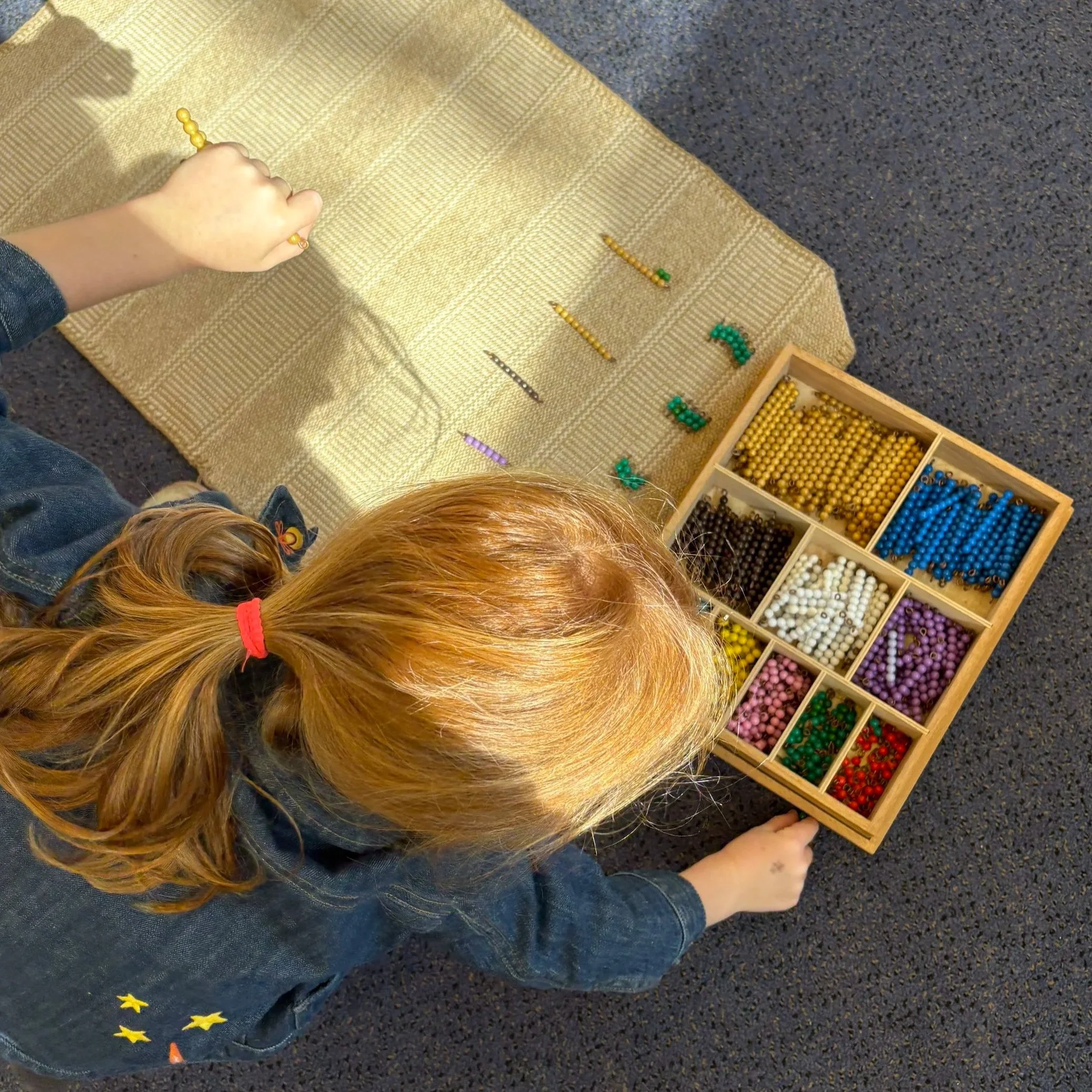
Our School Programs
Welcome to Barrenjoey Montessori School
Established in 1985, our independent, not-for-profit school offers Playgroup (Birth-3), Preschool (3-6), Lower Primary (6-9) and Upper Primary (9-12). We are a close-knit community dedicated to authentic Montessori education and lifelong learning.
Delivering a Montessori method of learning, we provide an evidence-based, future-proofed style of education, which also fulfils key learning outcomes from the Early Years Learning Framework and the NSW Education Standards Authority (NESA) Curriculum.
With exceptionally qualified Montessori trained educators leading and supporting in our classrooms, the children and their families experience a truly child-centred, individual style of education and a connected, supportive community.
“Children learn by doing. They don’t learn by sitting in a chair all day in a classroom, they need to be doing it for themselves.”
Preschool Director
“We’ve witnessed our child’s confidence and independence flourish since starting at Barrenjoey Montessori School”
Preschool Parent
The 3 Year Cycle
Led by exceptional qualified Montessori Directors, children remain together in 3-year cycles, creating a rich environment that mirrors real-world settings. This structure fosters peer mentorship, everyday collaborative learning, leadership development, and strong social-emotional growth. The multi-age grouping supports a natural learning cycle - students progress from learners to mentors - strengthening both understanding and community bonds.
This builds trust to guide them through the curriculum in a way that suits the individual child, their learning style and level of understanding, so that lessons can be delivered at a child’s own pace.
Multi-age classrooms reflect the diversity of our wider community, where the mix of ages, abilities and backgrounds offers numerous benefits for all learners. These include:
Older children act as role models for younger students, with opportunities to assume leadership roles.
Children are able to work at their own pace without feeling conspicuously 'ahead' or 'behind' their peers.
Younger children can seek help from older or more experienced peers, rather than turning to an adult for assistance.
Ultimately, this fosters the development of soft skills such as listening, patience, and empathy.
Each three-year cycle contains a sequence of information and skills that depends on the repetition of similar exercises to ensure concepts are fully grasped., correspond to the three steps of a quality learning process:
1. Acquisition; 2. Refinement; and 3. Consolidation.
Key Benefits
Playgroup (0-3 Years)
“Help me explore my world”
-
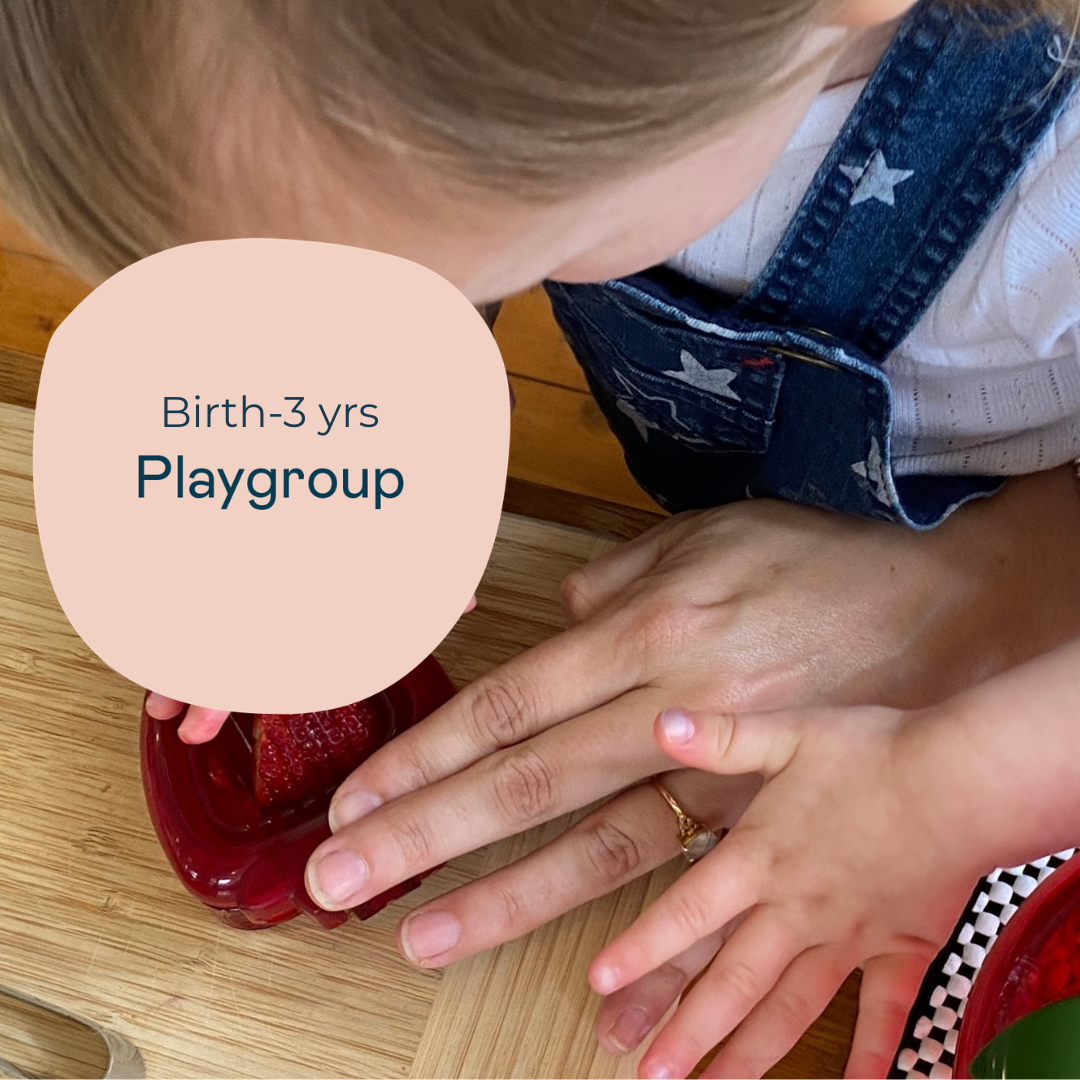
We provide guidance for parents while nurturing infant development and supporting the toddler’s natural tendency toward independence. Our pre-walker (0–18 months) and walker (18 months–3 years) sessions are led by a trained Montessori Birth–3 Director, with the parent or caregiver attending alongside their child once a week.
Every activity is carefully chosen to match your infant or toddler’s development needs. The furniture and materials are child-sized, allowing children to explore without relying on adult assistance. This ability to choose, complete and repeat a task with minimal interference helps build focus and concentration skills vital throughout life. For pre-walkers, this is a chance to connect and learn alongside your infant and other parents in a warm, supportive environment. For those on the move (walkers), our program provides a stimulating space full of discoveries and opportunities for independence.
-
Songs, stories and materials that enrich vocabulary and foster communication.
-
Activities that refine gross and fine motor skills, coordination, and visual discrimination.
-
Simple tasks like sweeping and preparing snacks help develop everyday independence.
-
Art, music and movement offer opportunities for creative discovery.
“Our end goal is supporting your child’s blossoming independence…the joy of accompanying them is you also get the opportunity to discover and reflect.”
Playgroup Director
Preschool (3-6 Years)
“Help me explore my world”
-
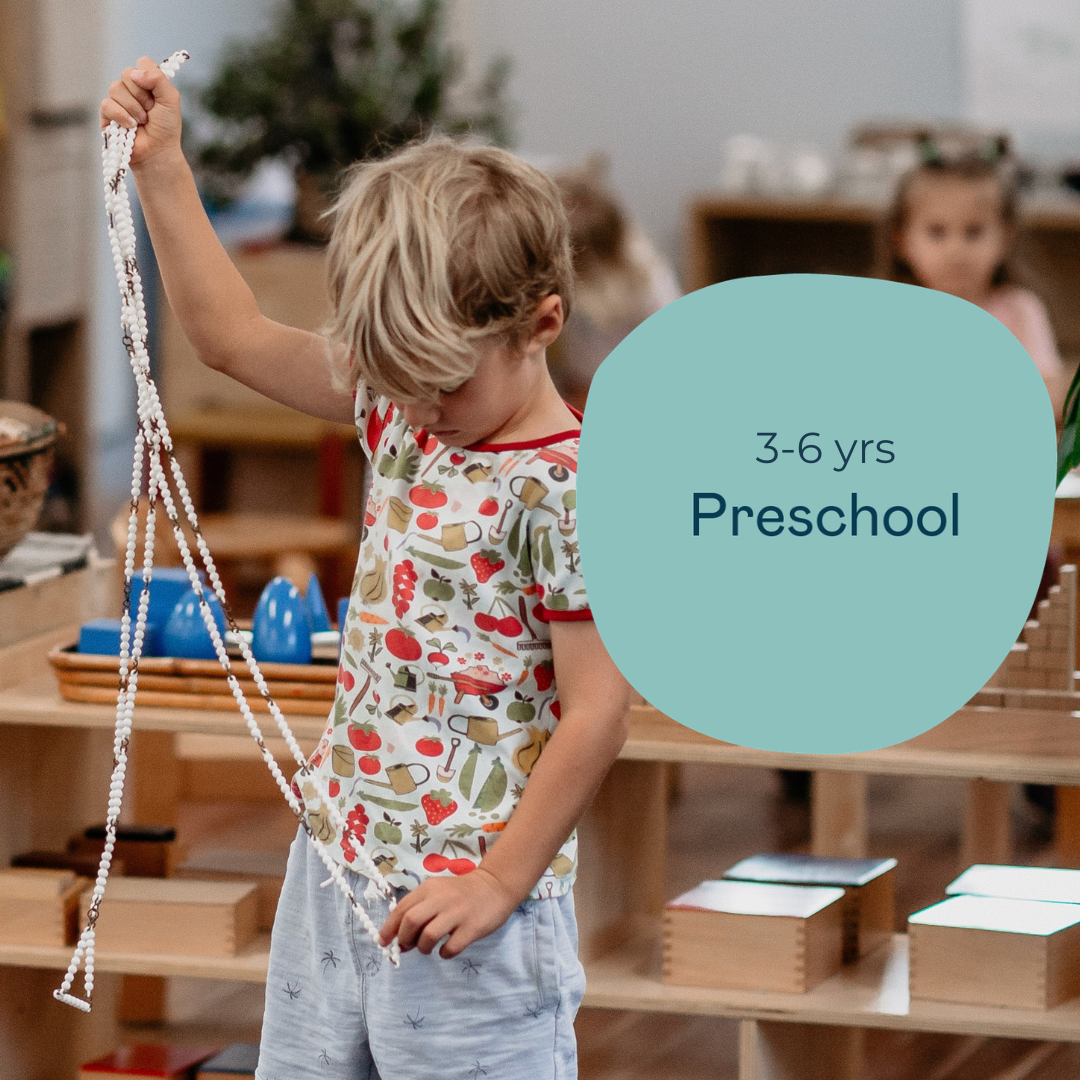
In these formative years, children have an incredible ability to absorb knowledge and build the foundation for lifelong learning. Our Preschool program nurtures this natural curiosity, with three and four-year olds attending five morning sessions each week, with the option to extend to full days after a gentle orientation period. In their kindergarten year, children participate in a rich Montessori program aligned with the NESA curriculum - preparing them confidently for the next stage of their learning journey.
In carefully prepared environments we foster independence, self-discipline, motivation and mutual respect from a very early age. Our morning work cycle enhances concentration and instils a love of learning by allowing each child to explore lessons through subject matter and materials that spark their unique interests. This approach nurtures each child’s full potential, helping them grow into competent individuals at school, at home, and within the wider community.
Under the guidance of the Montessori Director, students follow a specially designed curriculum covering five key areas:
Practical Life, Sensorial, Language and Literacy, Mathematics and Cultural Studies.
“It struck me coming into a Montessori environment, to see at such a young age what children are capable of when given the chance and opportunity, in a way that is age-appropriate.” Preschool Director
Lower Primary (6-9 Years)
“Let me explore the world”
-
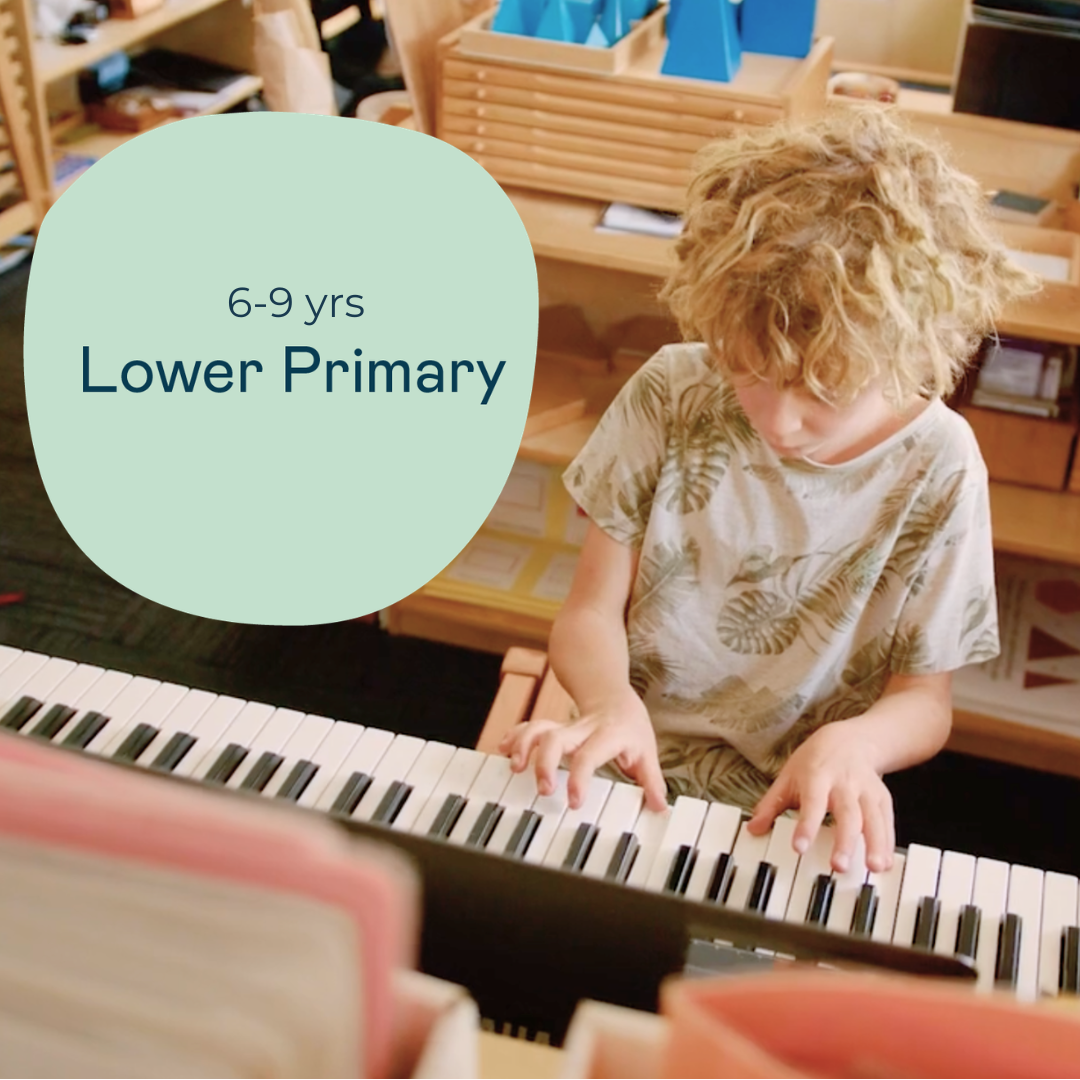
The Montessori Lower Primary (6-9 yrs) classroom fosters independence, collaboration and curiosity as children deepen their academic skills and explore big ideas in a supportive, mixed-age environment and within the framework of the NESA curriculum.
Equipped with a strong imagination and the ability to learn and think about abstract concepts, they are eager to explore both their immediate surroundings and the wider world. Within their class community, they take responsibility for their environment and well-being, developing social, emotional, conflict resolution and problem-solving skills that serve them beyond the classroom.
Curious, imaginative and social, the 6 to 9 year old child is driven by a desire to understand more about the world around them. Dr Montessori referred to this stage as the Intellectual Period (Primary age, 6-12 years); a critical time for expansive education, when the child is excited and ready to learn. Where the younger child is gaining physical independence, the primary child is working on intellectual independence.
Social development plays an important role at this time as children work through issues of friendship and group dynamics. During this period, the child receives lessons in the form of ‘Great Stories’ to guide their explorations of culture, science, mathematics, language, social rules and morals.
In the classroom, there is freedom to move, explore and interact within limits to enhance learning outcomes.
“Maria Montessori talked about a good balance between responsibility and freedom. We can’t have freedom without responsibility. And we can’t have responsibility without freedom.”
Lower Primary Director
Upper Primary (9-12 Years)
“Help me think for myself”
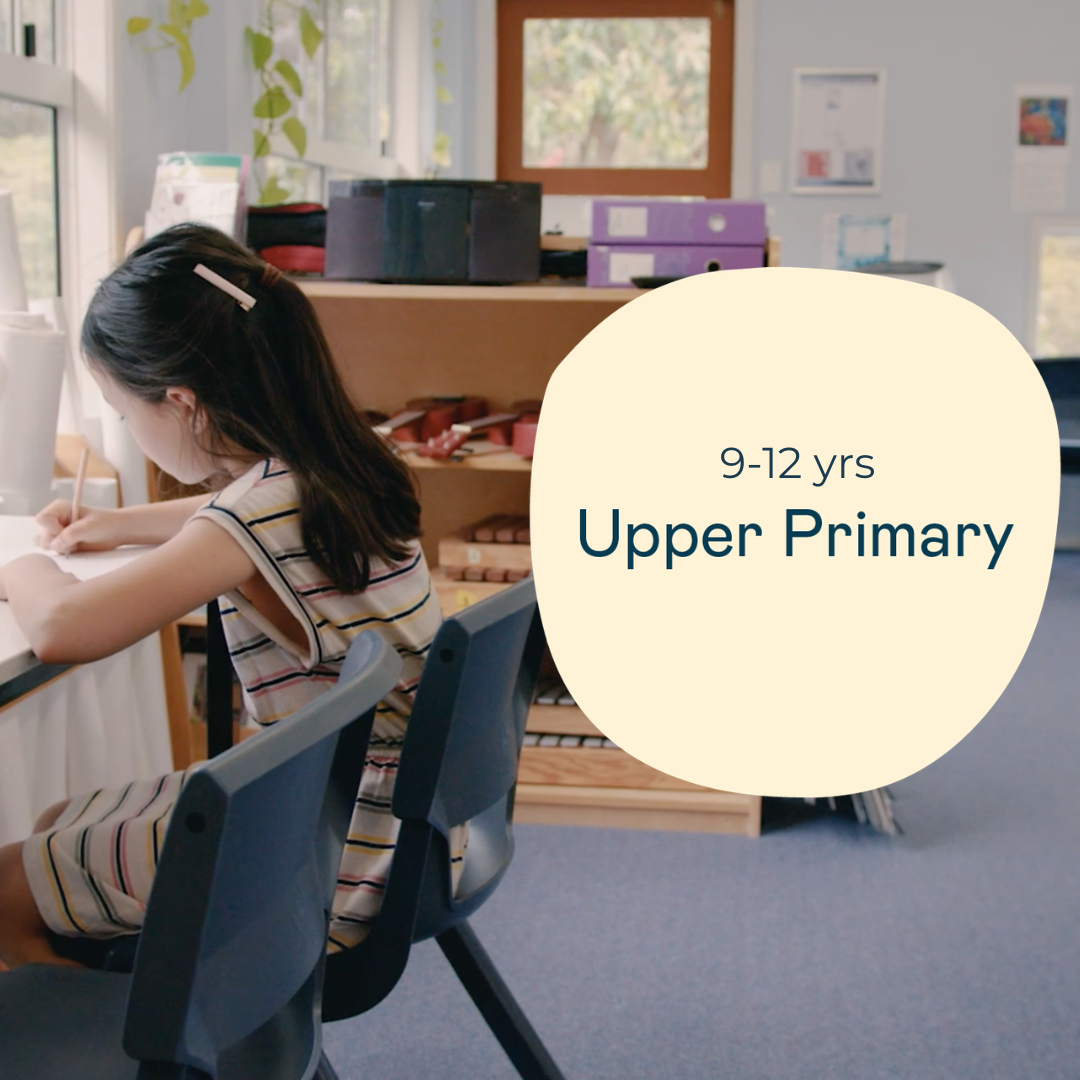
“At my end, I’m seeing children who are so independent, able to think for themselves, and articulate their thoughts. This is because they’ve spent all those years independently coming in and organising their day.”
Upper Primary Director
“The academics of Montessori, I have found, are actually quite advanced. When I entered high school, it definitely gave me a bit of a head start.”
BMS Graduate Alumni
-
In Upper Primary (9-12 yrs), children continue building their independence and exploring the world around them. During this period, they receive lessons to guide their explorations of culture, science, mathematics, language, social rules and morals. They are encouraged to take ownership of their learning and develop a holistic body of skills and knowledge to become confident, compassionate and self-motivated graduates.
Equipped with a strong imagination and an ability to learn and think about abstract concepts, the primary child is keen to explore both their immediate surroundings and to understand the wider world. Students continue to use Montessori materials as they develop their ability to abstract, complementing these with books, digital tools, real world experiences and community resources.
Whilst the traditional disciplines are all covered in accordance with the NSW curriculum, children are free to explore beyond the confines of the curriculum, should they wish and be capable of doing so.
The diverse Primary curriculum here at the campus covers:Mathematics, Language and Literacy, Science and Technology, Creative Arts, History, Geography and Society, and PDHPE.
Additional Educational Opportunities
We also offer cultural and indigenous studies, along with extracurricular opportunities such as:
Attend excursions and incursions, access books from our libraries, care for our garden, cook, sew, sing and perform in child-directed end of year performances for families.
Offsite school camps and a combined school sports day with the broader Montessori community.
Support and participate in the greater community through fundraising, environmental activities and our integrated peer support program.
The classrooms are rich and exciting environments where children are encouraged to develop ownership of their learning, using diaries and lesson plans to manage their time and schedules independently. Students work individually and in groups, with a student-led ‘going out’ excursion program providing opportunities to explore and research in the wider community.
Assessment occurs using a combination of observation, demonstration of mastery, and regular one-to-one student teacher conferences. Student progression is recorded in development reports issued to parents, as requested by NESA. Students may also participate in the national NAPLAN standardised testing in Year 3 and Year 5. The Montessori curriculum ensures that children not only meet required NESA primary outcomes, but develop a holistic body of skills and knowledge to become graduates who are confident, compassionate, independent, motivated and engaged.