
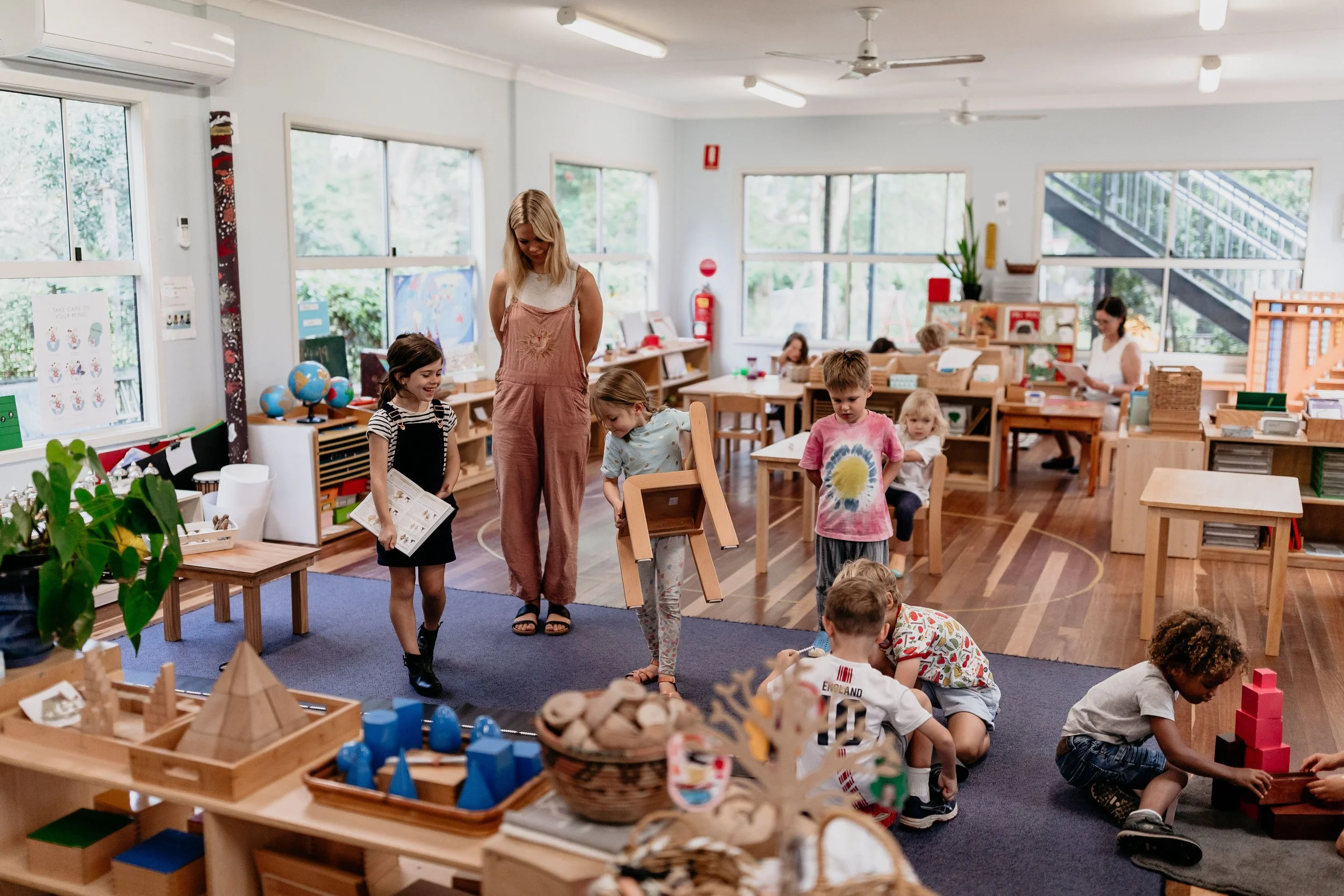
What Is Montessori?
Montessori is an educational philosophy focused on the total development of the child.
Developed by Dr Maria Montessori in the early 20th century, it was considered a groundbreaking approach at the time. Today, with the benefit of research, this holistic educational method has been shown to be most beneficial for the child’s current development and as a preparation for their future learning. The Montessori approach has played a role in Australian education for over 100 years. In 2020, over 22,000 Montessori schools across the globe celebrated the 150th anniversary of Dr Maria Montessori’s birth.
The key outcomes of a Montessori education include:
Independence and tolerance with respect for the rights and needs of others.
Initiative and self-motivation, embedding effective work habits for the future.
Creative intelligence and imagination.
Confidence, self-esteem and a sense of achievement.
The Montessori philosophy is child-centred, based on mutual respect and cooperation, and provides a secure and ordered environment in which the child feels free to explore, discover and realise their potential.
Why Choose It?
-
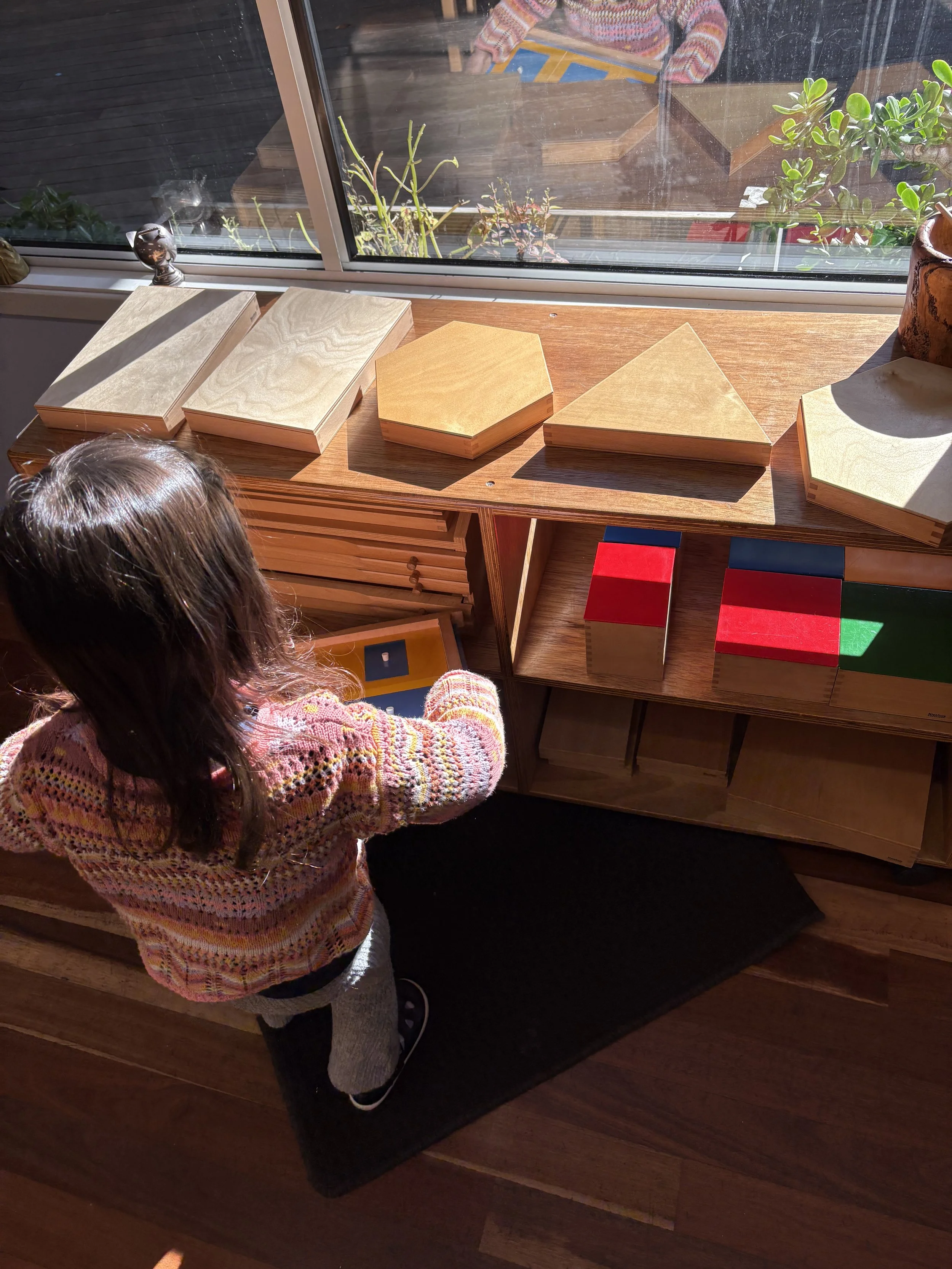
1. Child-centred learning environment
Carefully prepared to meet students’ needs at each level of development.
Offers freedom to move, explore and interact, within limits.
Designed to support individualised learning.
Encourages self-motivation and time management.
Responsive and adaptive to students’ development.
Calm, ordered and respectful.
-
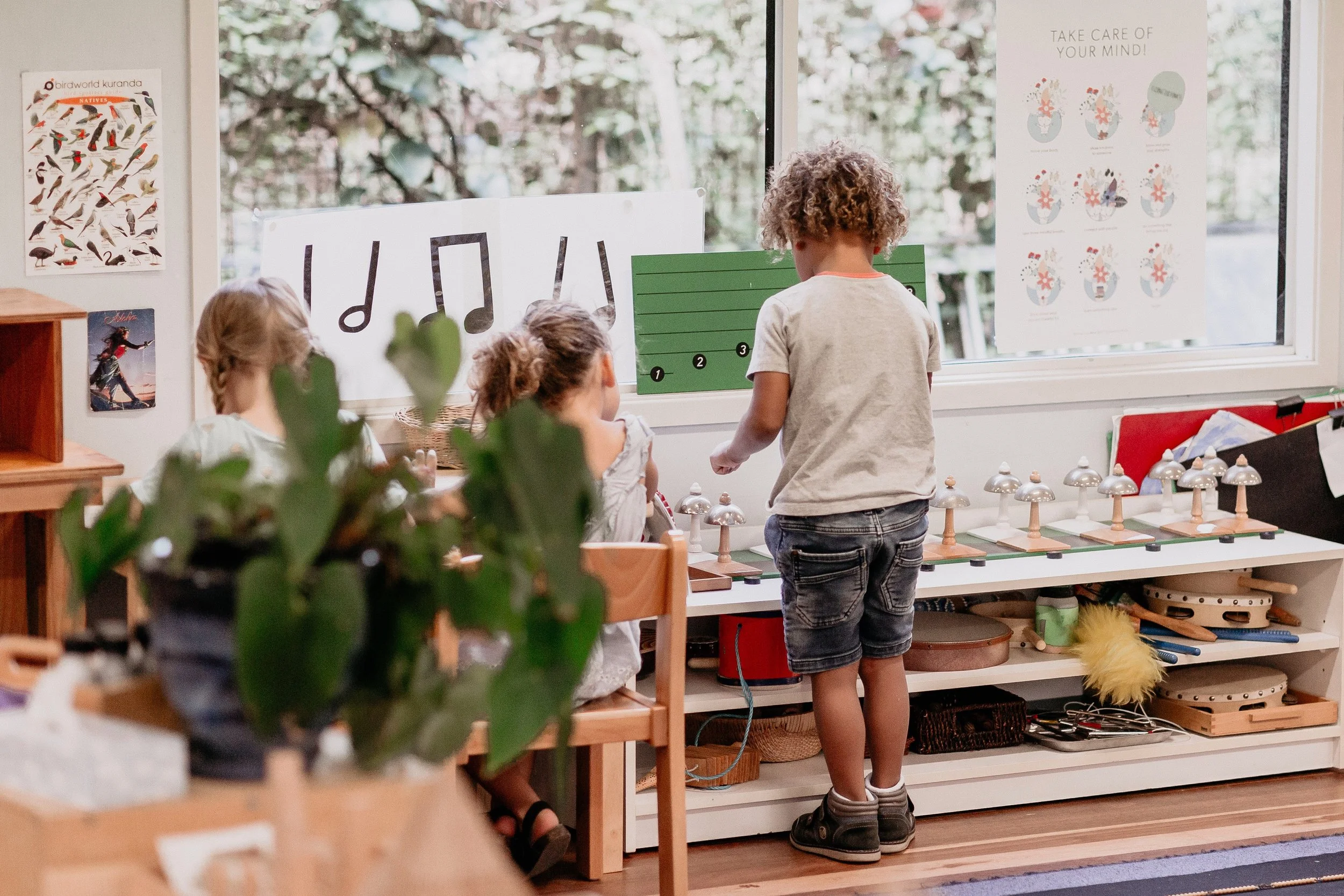
2. Purpose-designed learning activities
Physical materials provide active, hands-on learning
Progress sequentially to support understanding of concepts from concrete to abstract.
Contain a built in control of error, allowing children to self-correct.
Promote independence, concentration and a sense of satisfaction.
Encourage children’s intrinsic motivation to learn
-
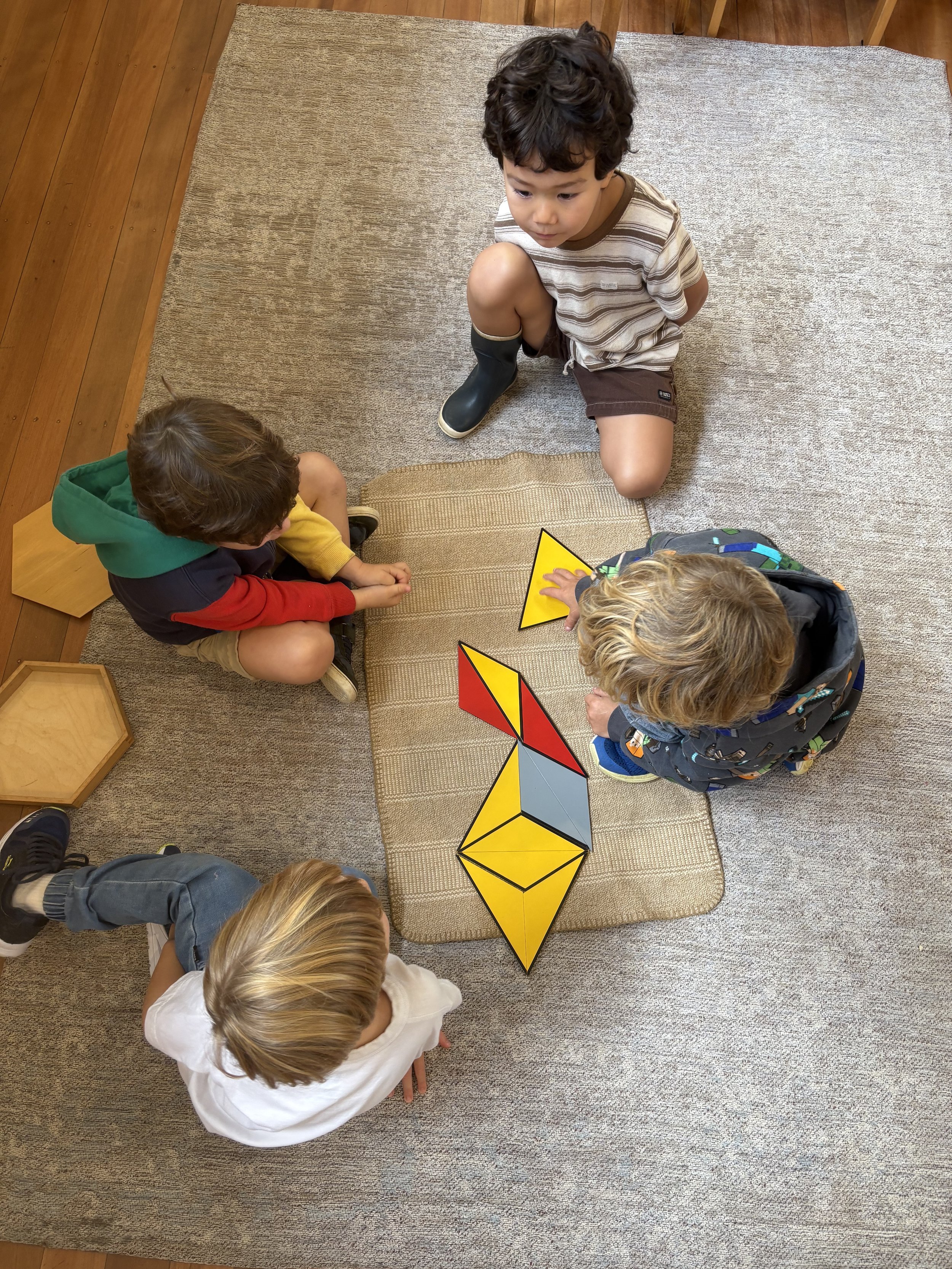
3. Community Focused
Classes are mixed age, creating opportunities for leadership and peer teaching.
Students stay in one environment for three years, fostering strong bonds and a sense of ownership.
Focused on cooperation and collaboration, not competition.
-
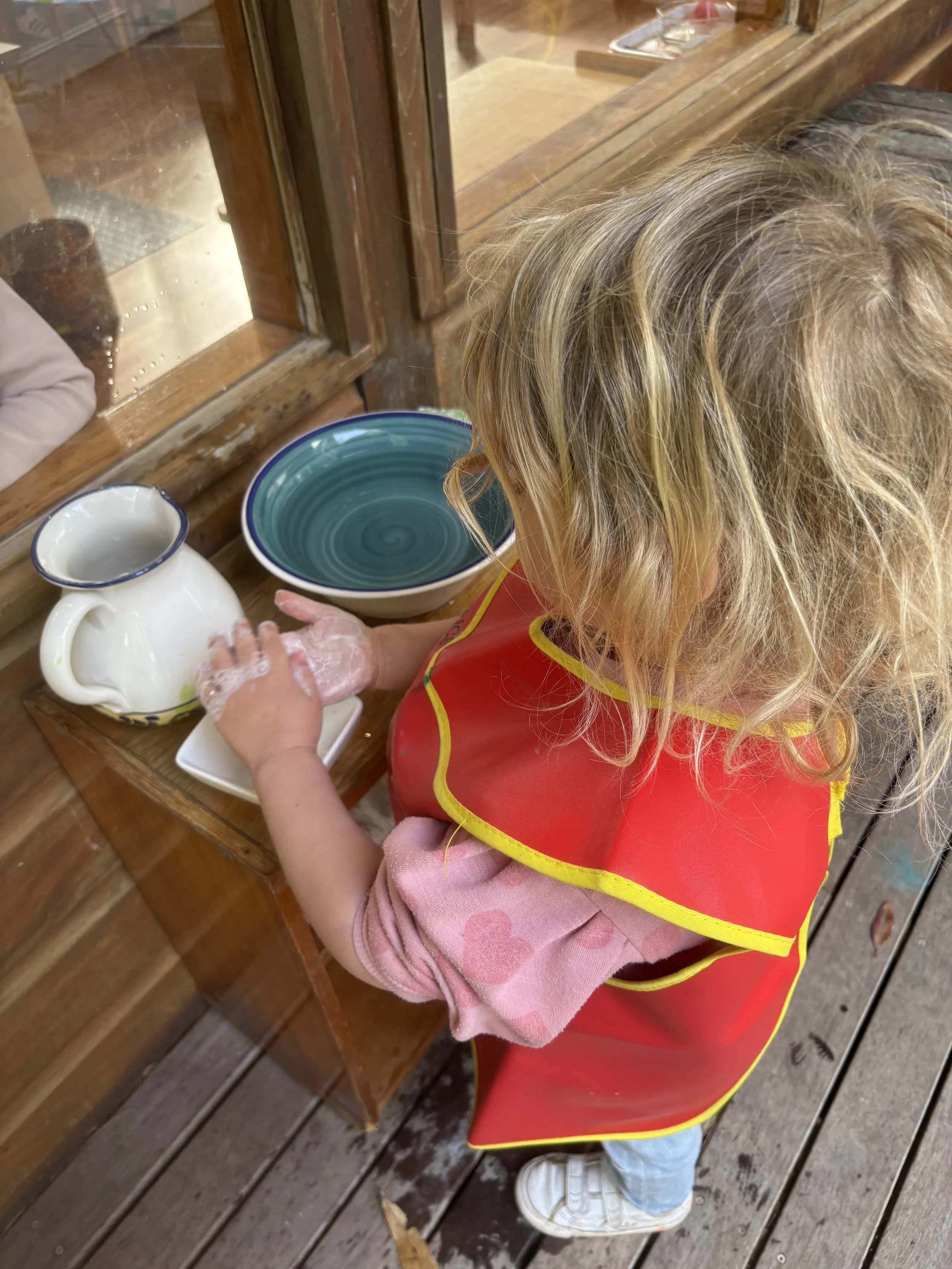
4. Educates the whole child
Cultivates the child as a full human being.
Instills universal values of respect, tolerance, compassion and responsibility.
Incorporates the development of practical life skills, promoting independence.
Promotes service to others and a global perspective.
Works in harmony with the stages of children’s physical, academic, social and emotional growth.
-
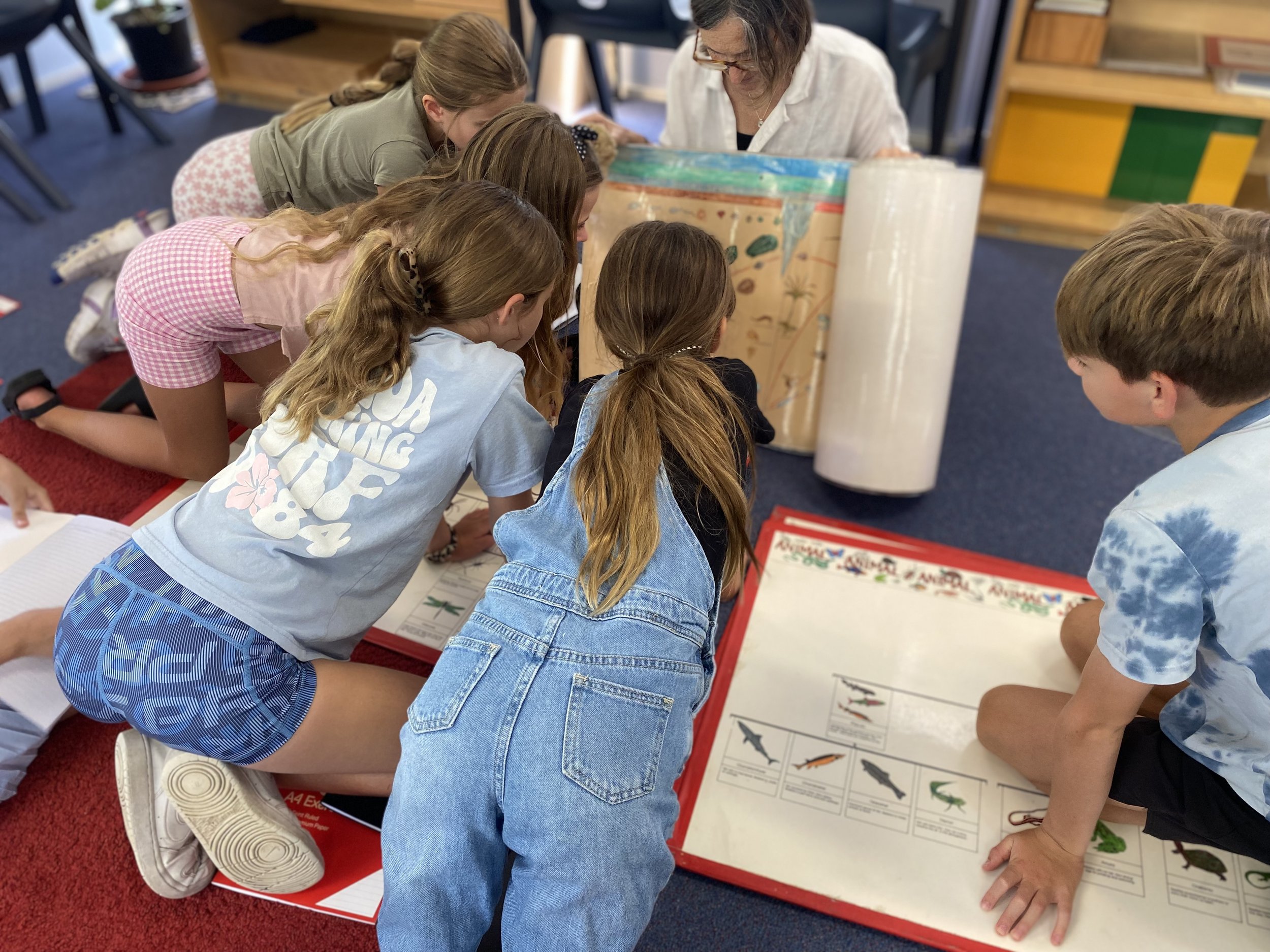
5. Teachers as facilitators
Empathetic while providing clear and consistent limits.
Close observation allows teachers to respond effectively to learning and behavioural needs.
Work collaboratively with students as an educational resource.
Engage respectfully with students and model desired behaviours and attitudes.
Accept that children learn in different ways and at different paces, and adjust strategies and timeframes to individual needs.

Frequently Asked Questions - Montessori
Below are the top 10 questions I'm asked most often about Montessori education when I tour prospective families. For more answers to the most commonly asked questions I receive about our school and day-to-day life at BMS, please click here. And for anything else, I’d welcome a call or email to chat further.
Melissa Chandler, Principal.
-
This is one of the hardest questions to answer because every school is different. There are many wonderful schools, and every family is looking for something slightly different for their child.
What I can tell you is what we value at Barrenjoey Montessori School.
We believe children are born curious. From the moment they're born, they have a natural desire to explore, ask questions, make discoveries and understand the world around them. One of the things I love most about the Montessori approach is that it protects and nurtures that curiosity rather than rushing children through their learning.
The Montessori approach starts with the child. Rather than expecting every child to learn the same thing, in the same way, at the same time, teachers carefully observe each child, introducing new lessons when they are developmentally ready and providing the right balance of support and challenge.
What I see every day are children who genuinely love coming to school. They aren't learning because someone tells them they have to—they're learning because they're curious, because they want to. They don't dread certain subjects, because learning is presented in ways that engage and inspire them. They ask thoughtful questions, persevere when something is challenging and experience the satisfaction of discovering things for themselves.
I also see teachers who are just as curious and are still learning. Montessori teachers are constantly observing, wondering, adapting and looking for new ways to engage each child. The relationships between teachers and children are built on mutual respect because we believe children deserve the same respect we expect them to show others.
Ultimately, both Montessori and mainstream or other independent schools want children to succeed. The Montessori approach simply takes a different path—one that places equal importance on academic growth, independence, confidence, resilience and preserving the joy of learning.
-
Yes. At BMS, our programs meet all Australian education requirements while remaining true to the Montessori approach.
In Preschool, our program is guided by the Early Years Learning Framework (EYLF) and meets all NSW early childhood education requirements. Montessori beautifully complements the EYLF, with both recognising the importance of play, relationships, independence and learning through exploration.
In Primary, BMS is registered with the NSW Education Standards Authority (NESA), the body responsible for overseeing school education in New South Wales. Our curriculum meets all NSW curriculum requirements. The difference is not what children learn, but how they learn it.
The Montessori curriculum covers the same key learning areas as other schools, including English, Mathematics, Science, History, Geography, and Creative Arts. Rather than teaching these as isolated subjects, Montessori presents learning in an integrated, hands-on way that helps children develop a deep understanding of the concepts they're exploring.
Lessons are introduced individually or in small groups when children are developmentally ready. This allows children to build confidence and mastery before moving on to increasingly complex ideas.
While the learning may look different, our students meet the same curriculum requirements while developing independence, critical thinking and a genuine understanding of what they are learning.
-
One of the unique features of Montessori education is the mixed-age classroom. Rather than grouping children by a single year level, children learn alongside peers across a three-year age range.
This creates a community where learning happens naturally. Younger children are inspired by watching older classmates, while older children deepen their own understanding by demonstrating skills, sharing knowledge and becoming positive role models.
We carefully balance each classroom to ensure a healthy mix of ages, personalities and learning stages. While the exact numbers vary slightly from year to year, this thoughtful balance is one of the reasons mixed-age classrooms work so well.
One of the things visitors often notice is how naturally the children help one another. Older children patiently support younger classmates, while younger children look ahead with excitement at what they'll one day be able to do. It's a classroom built on encouragement rather than competition, and that's one of the reasons the mixed-age model is such a powerful part of a Montessori education.
-
Sports are included in the curriculum each term, with activities such as swimming, surfing, t-ball and athletics (including a Montessori Sports Carnival), along with ongoing class This is one of the questions we're asked most often.
While children have choice within the Montessori classroom, that doesn't mean they choose whether they learn essential skills. Our teachers carefully observe each child, present new lessons at the right time and keep track of their progress across all areas of the curriculum.
Because lessons are tailored to the individual, children move forward when they're ready, rather than waiting for the rest of the class or feeling pressured to keep up. Behind the scenes, our teachers ensure every child is working towards the outcomes required by both the Early Years Learning Framework and the NSW curriculum, depending on their stage of learning.
The result is an education that is both personalised and purposeful. Children develop strong academic foundations while maintaining a genuine curiosity and love of learning.
-
One of the strengths of Montessori is that children don't have to wait for the rest of the class before moving on to the next challenge.
When a child is ready, our teachers introduce more advanced materials, deeper investigations and increasingly complex concepts. Because every child follows an individual learning pathway, they're free to progress at a pace that reflects their readiness rather than their age.
Equally important, children who are ready for more often become mentors within the classroom. Explaining an idea, demonstrating a skill or supporting a younger peer helps consolidate their own understanding while building confidence, empathy and leadership.
Our teachers are constantly observing each child, knowing when they need more practice, when they need a new challenge and when it's time to simply enjoy mastering a skill. This personalised approach helps every child remain engaged, motivated and appropriately challenged.
-
A Montessori classroom looks quite different from the classrooms many parents remember from their own school days. For many families, it's unlike anything they've experienced before.
Rather than seeing every child doing the same activity at the same time, you'll see children working individually or in small groups, each engaged in work that interests them. Some children may be reading, others exploring mathematics with Montessori materials, while another group is conducting a science experiment or working on a research project. Their activity has been chosen from carefully prepared work that has been introduced by their teacher. This allows each child to progress at a pace that's appropriate for them while being gently guided and challenged along the way.
The teacher plays a very active role throughout the day. Rather than standing at the front of the classroom delivering the same lesson to everyone, Montessori teachers observe each child closely, present new lessons individually or in small groups, monitor progress and know when it's time to introduce the next challenge.
The classroom is calm, purposeful and busy in a different way. Children move respectfully around the environment, choose meaningful work, seek help when they need it and develop increasing independence as they grow.
One of the first things families often notice is how peaceful our classrooms feel. That's because children have the time to become deeply engaged in their learning, rather than being interrupted every 30 or 40 minutes to move on to the next subject.
Every lesson, every material and every part of the environment has been carefully prepared to support children's learning and development. While it may look different from a traditional classroom, there's a great deal of purpose, structure and intention behind everything you see.
Children are introduced to foundational skills at the right developmental moment, and teachers track progress closely to ensure milestones are being met.
The multi-age setting also allows children to learn from peers, revisit concepts, and consolidate skills more deeply over time.
We work to the Australian Early Learning Framework and the State Curriculum for children in their Kindergarten year (typically the last year of the 3-6 cycle). The teachers 'track' the children behind the scenes to ensure they are receiving all the lessons and materials they are required to, however this is done in an individualised approach, appreciating that learning is not linear, we meet each child where they are at instead of ticking off a list.
-
Montessori is sometimes misunderstood as giving children complete freedom to do whatever they like. In reality, children are given meaningful choices within carefully considered limits.
Children are encouraged to make choices about their learning, but those choices take place within a thoughtfully prepared environment and with the guidance of highly trained Montessori teachers. They choose from work that has been carefully introduced to them, learning to manage their time, take responsibility for their decisions and work respectfully alongside others.
Parents sometimes ask, "But what if my child doesn't like maths?" or "What if they choose reading all day?" That's where the skill of the Montessori teacher is so important.
Our teachers know every child well. Through careful observation, they understand what motivates each child, what captures their interest and how to present new learning in ways that spark curiosity and engagement. One of the things I admire most about Montessori teachers is their ability to find the spark that engages each child. They know when to gently encourage, when to challenge and when to step back, helping children discover they are capable of far more than they often realise themselves.
Montessori isn't about leaving children to direct their own education. It's about skilled teachers carefully guiding each child's learning journey, helping them develop independence, resilience and the confidence to tackle work that doesn't always come easily.
-
Montessori teachers complete specialised training in addition to their teaching qualifications. Becoming a Montessori teacher involves learning not only the Montessori curriculum and materials, but also the art of observing children, understanding their development and knowing how and when to introduce new learning.
At Barrenjoey Montessori School, our teachers hold recognised Montessori qualifications through the Association Montessori Internationale (AMI), the international organisation founded by Dr Maria Montessori to preserve and uphold the integrity of the Montessori approach. We place a strong value on authentic Montessori teacher training because we believe it is fundamental to providing children with the highest quality Montessori education.
One of the things I admire most about Montessori teachers is their ability to find the spark that engages each child. They know how to present learning in ways that capture a child's interest, gently encourage them through challenges and build both confidence and independence over time.
I've also found that Montessori attracts a very special kind of educator. Our teachers don't simply see Montessori as a way of teaching—they believe in it as a way of understanding and respecting children. For many, it's far more than a profession. It's a philosophy they embrace every day, and that genuine passion is something our children and families experience from the moment they walk through the door.
When families visit our school, they often notice the beautiful classrooms and carefully prepared materials. While these are important, it's the skill, passion and dedication of our teachers that truly bring the Montessori environment to life.
-
This is one of the questions we're asked most often, and understandably so.
Montessori children make the transition to high school with confidence. Throughout their time at Barrenjoey Montessori School, they develop much more than academic knowledge. They learn how to manage their time, organise themselves, think independently, solve problems and take responsibility for their own learning.
Academically, our students are well prepared. As a registered independent school, we meet the NSW curriculum and NESA requirements while delivering them through the Montessori approach. This means children leave us with strong foundations across all key learning areas, along with the confidence to tackle new challenges.
Just as importantly, they leave with well-developed social and emotional skills. They're used to working collaboratively, communicating respectfully with both adults and peers, and adapting to new situations. These qualities help them settle quickly into their new school communities.
Many of our graduates go on to attend independent, Catholic and public high schools, and we regularly hear positive feedback from both families and receiving schools about how well they adjust and thrive.
-
Success looks different for every child, so rather than asking whether Montessori children become "successful," we prefer to ask whether they're well prepared for life.
The Montessori approach develops much more than academic knowledge. Children learn to think independently, solve problems, manage their time, work collaboratively and take responsibility for their own learning. These are qualities that continue to serve them well long after they leave the classroom.
Research into Montessori education suggests that graduates often demonstrate strong executive functioning skills, creativity, adaptability and social confidence—qualities that are increasingly valued in today's world. More importantly, they develop a genuine sense of who they are, the confidence to embrace new challenges and the resilience to keep learning throughout their lives.
As a Principal, one of the greatest privileges of my role is watching our students grow from curious three-year-olds into capable young people ready for high school. It's even more special for me personally, having watched my own children make that same journey. Seeing the confident, independent young people they have become has only strengthened my belief in this way of educating children.
Ultimately, our goal isn't simply to prepare children for the next year of school. It's to prepare them for a lifetime of learning, meaningful relationships and the confidence to contribute positively to the world around them.
Video Overview
Learn More
The Montessori method of education is over 150 years old, but steeped in our modern understanding of child development.
With scientifically devised materials and evidence based research to back up her understanding and the results of this foundational education style on adult wellbeing, there’s a lot to learn and understand for those that wish to dive deeper.
And for great tips and tricks on parenting out babies, toddlers and beyond with this philosophy in mind, we have curated a range of materials on your behalf - videos, books, podcasts etc.
What People Say
-
"The atmosphere in the classroom is how I wish the rest of life and the world could always be: calm yet full of spark; engaged and present; peaceful; happy. What a great start to life this gives our children! Thank you so much for cultivating this environment ;-) Every time I observe in the classroom I’m even more committed to this amazing school. ”
Anonymous, BMS Parent
-
“I'm sure attending Preschool 5 days a week helped to foster my daughter's independence, predictability, order, organisation, and her sense of control through this new stage. I discovered that the fears and insecurities were mine, but so were the certainties of the chosen institution, the human group that runs and supports it, and the Montessori methodology, which was a life changer in my daughter's development (and mine as parent).”
Josie, BMS Preschool Parent
-
“I admit I felt a little hesitant about sending our 3‑year‑old to preschool five days a week. But it’s been the best decision we've made. Seeing her develop further into a happy, social, confident little person with a true love for learning makes us very proud and the 5 days a week give her routine, a great sense of belonging and helps her build strong friendships.”
Jip, BMS Preschool Parent
-
“Being at BMS has taught us the importance of community, and that the childhood education journey is a collaboration that requires planning, open communication, persistence and trust….It’s a proud moment to travel full circle - for the growth and independence that you hope for your child to be actualised. We are truly grateful for all BMS staff that have supported us and look forward with positivity to his unfurling into adolescence.”
Anna, BMS Upper Primary & Alumni Parent
-
“The parent education nights are inspiring. I always leave feeling incredibly grateful that my children are taught in a beautiful, prepared environment using such carefully considered and crafted materials by passionate, keenly observant educators. I wish this had been my primary school experience!”
Anonymous, BMS Upper Preschool & Alumni Parent
-
I recently attended a session at my child’s Montessori school, where they walked us through the fascinating world of Geometry and the hands-on materials used across all cycles aged 3-12 yrs. What I saw was nothing short of amazing. The precision and quality of these materials, the way they bring geometry to life, and how effortlessly children grasp complex concepts—it was truly eye-opening. Montessori doesn’t just teach kids; it builds a rock-solid foundation for life. It nurtures critical thinking, problem-solving, and a love of learning that stays with them forever. This isn’t just an education—it’s a lifelong advantage. Seeing firsthand how children engage, explore, and truly understand through Montessori made me realise how much more powerful and effective this approach is compared to traditional methods.”
Anonymous, BMS Preschool Parent
"The academics of Montessori I have found are actually quite advanced when I came into high school. So it definitely gave me a bit of a head start.”
Jacqueline, BMS Graduate