
Questions Often Asked
One of my favourite parts of my role is meeting families and answering their questions. Choosing the right school is a big decision, and every family wants to know they've found a place where their child will be known, supported and valued as an individual.
Below are some of the questions I'm asked most often. I hope my answers give you a sense of who we are, what we value and what makes Barrenjoey Montessori School such a special place to learn and grow. If you'd like to continue the conversation, I'd love to welcome you to the school for a tour.
Melissa Chandler, Principal.

Why Barrenjoey Montessori School (BMS)?
-
People often ask me what makes Barrenjoey Montessori School different.
Of course, I could tell you about our Montessori curriculum, our beautiful learning environments or our experienced teachers. They're all important, but they're not what families remember after they visit.
What they remember is the feeling.
There's a sense of calm—in our classrooms and in our natural surroundings. Children are deeply engaged in their learning rather than being rushed from one activity to the next. Older children naturally help younger children. Teachers know every child by name, and every child knows they belong. Children are grounded, connected to the environment and genuinely enjoy coming to school.
We believe children thrive when they are truly known.
That belief shapes every decision we make—from the way we prepare our classrooms and structure the school day to the relationships we build with our staff, our children and our families.
Our Preschool and Primary programs are designed as one continuous educational journey. We aren't simply preparing children for the next year of school; we're nurturing curious, capable and compassionate young people who develop confidence, resilience and independence.
It's difficult to explain the feeling of Barrenjoey Montessori School in words. Perhaps that's because, for me, it's deeply personal. My own children attended Barrenjoey Montessori School from their toddler years through to leaving as confident young people ready for high school. Experiencing Barrenjoey Montessori School as both a Principal and a parent has only deepened my belief in this way of educating children.
I see it every day—in the smiles as children arrive each morning, in the confidence they develop as they grow, and in the capable, resilient young people they become when they leave us for high school.
But the best way to understand Barrenjoey Montessori School isn't by reading about it—it's by spending time here. We'd love to welcome you for a tour, answer your questions and let you experience our community for yourself.
-
This is one of the hardest questions to answer because every school is different. There are many wonderful schools, and every family is looking for something slightly different for their child.
What I can tell you is what we value at Barrenjoey Montessori School.
We believe children are born curious. From the moment they're born, they have a natural desire to explore, ask questions, make discoveries and understand the world around them. One of the things I love most about the Montessori approach is that it protects and nurtures that curiosity rather than rushing children through their learning.
The Montessori approach starts with the child. Rather than expecting every child to learn the same thing, in the same way, at the same time, teachers carefully observe each child, introducing new lessons when they are developmentally ready and providing the right balance of support and challenge.
What I see every day are children who genuinely love coming to school. They aren't learning because someone tells them they have to—they're learning because they're curious, because they want to. They don't dread certain subjects, because learning is presented in ways that engage and inspire them. They ask thoughtful questions, persevere when something is challenging and experience the satisfaction of discovering things for themselves.
I also see teachers who are just as curious and are still learning. Montessori teachers are constantly observing, wondering, adapting and looking for new ways to engage each child. The relationships between teachers and children are built on mutual respect because we believe children deserve the same respect we expect them to show others.
Ultimately, both Montessori and mainstream or other indepdent schools want children to succeed. The Montessori approach simply takes a different path—one that places equal importance on academic growth, independence, confidence, resilience and preserving the joy of learning.
-
Yes. At BMS, our programs meet all Australian education requirements while remaining true to the Montessori approach.
In Preschool, our program is guided by the Early Years Learning Framework (EYLF) and meets all NSW early childhood education requirements. Montessori beautifully complements the EYLF, with both recognising the importance of play, relationships, independence and learning through exploration.
In Primary, BMS is registered with the NSW Education Standards Authority (NESA), the body responsible for overseeing school education in New South Wales. Our curriculum meets all NSW curriculum requirements. The difference is not what children learn, but how they learn it.
The Montessori curriculum covers the same key learning areas as other schools, including English, Mathematics, Science, History, Geography, and Creative Arts. Rather than teaching these as isolated subjects, Montessori presents learning in an integrated, hands-on way that helps children develop a deep understanding of the concepts they're exploring.
Lessons are introduced individually or in small groups when children are developmentally ready. This allows children to build confidence and mastery before moving on to increasingly complex ideas.
While the learning may look different, our students meet the same curriculum requirements while developing independence, critical thinking and a genuine understanding of what they are learning.
-
One of the unique features of Montessori education is the mixed-age classroom. Rather than grouping children by a single year level, children learn alongside peers across a three-year age range.
This creates a community where learning happens naturally. Younger children are inspired by watching older classmates, while older children deepen their own understanding by demonstrating skills, sharing knowledge and becoming positive role models.
We carefully balance each classroom to ensure a healthy mix of ages, personalities and learning stages. While the exact numbers vary slightly from year to year, this thoughtful balance is one of the reasons mixed-age classrooms work so well.
One of the things visitors often notice is how naturally the children help one another. Older children patiently support younger classmates, while younger children look ahead with excitement at what they'll one day be able to do. It's a classroom built on encouragement rather than competition, and that's one of the reasons the mixed-age model is such a powerful part of a Montessori education.
-
Children typically begin their Montessori journey with us at three years of age in our Preschool program. Many families also choose to attend our Playgroup first, which provides a wonderful introduction to the Montessori philosophy, our classrooms and our community.
Starting at the beginning of the first three-year cycle allows children to become familiar with the environment, build independence and develop strong foundations for learning. The consistency of remaining with the same teacher and peer group over several years gives children time to grow in confidence and develop at their own pace.
Every child's journey is unique, and we're always happy to talk with families about the best starting point for their child.
-
The ideal time to begin a Montessori education is at three years of age. This gives children the opportunity to fully experience the Montessori curriculum, build strong foundations and develop confidence and independence over time.
Our Preschool program is designed as the beginning of a continuous educational journey through to the end of Primary.
From time to time, we do consider enrolments for children joining later in the Preschool cycle. In these situations, we take the time to understand each child as well as each family. Because our Preschool is the beginning of a long term journey, we give priority to families who are seeking a long-term Montessori education for their child.
If you're considering Montessori for your child and are unsure about the best time to begin, we'd love to have a conversation with you about your family's circumstances and whether Barrenjoey Montessori School is the right fit.
-
Yes. We're fortunate to have a stable and dedicated team, with many of our educators choosing to stay with us for many years. This continuity provides children with consistent relationships and helps create the calm, connected community that families value.
Like any school, we do experience natural changes from time to time, including maternity leave, career opportunities and retirement. Most recently, we've celebrated two teachers beginning their families and farewelled a much-loved primary teacher after 13 years with the school. While these milestones bring change, they're also a reflection of the strong, long-term culture we've built.
When we do recruit, we take great care to find educators who not only hold recognised Montessori qualifications but who also share our philosophy and commitment to seeing each child as an individual.
Because our team works closely together and shares a common approach to teaching, children experience consistency in their learning and relationships, even as the school naturally evolves over time.
-
Yes. We welcome new students throughout the year, with enrolments carefully managed to maintain the balance of each classroom.
Children who join us after the beginning of a cycle are supported through a thoughtful transition process. Our teachers take the time to get to know each child, introducing them to the classroom, routines and materials at a pace that helps them feel comfortable and confident. One of the strengths of a mixed-age classroom is that older children naturally help new classmates settle in, creating a warm and welcoming environment from day one.
For children joining Montessori for the first time, there is often a short period of learning how the classroom works and becoming familiar with the materials. Teachers provide individual lessons and carefully guide this process, ensuring each child is supported according to their needs and stage of development.
In our experience, children generally settle quickly and become valued members of the classroom community.
-
Our community is made up of families from many different backgrounds, each bringing their own experiences, perspectives and stories.
What they tend to have in common is that they've made a conscious decision to choose a different path for their child's education.
Some families come to us because they already know and value Montessori education. Others begin their journey simply knowing they're looking for something different. As they learn more about the Montessori philosophy, they often discover that it reflects exactly what they've been searching for—an approach to education that respects childhood, values independence, nurtures curiosity and sees every child as an individual.
While every family is different, they share a belief that education is about much more than preparing children for the next test or the next stage of school. They want their child to be known, supported and valued as an individual. They understand that confidence, resilience and independence are built through meaningful relationships, purposeful experiences and the time to develop at a pace that is right for each child.
As a small, community-based school, our families also understand that community doesn't just happen—it grows through connection, contribution and shared experiences. Whether it's helping at an event, joining a working bee or simply getting to know other families, everyone plays a part in creating the welcoming culture that makes Barrenjoey so special.
If that sounds like the kind of education you're seeking for your child, we'd love to welcome you to Barrenjoey Montessori School.
-
No. While Montessori is a globally recognised approach to education, Montessori schools are independently owned and operated. There is no central organisation or franchise that owns or manages Montessori schools.
Because the name "Montessori" isn't trademarked, schools can use the term without belonging to a central organisation. For this reason, Montessori schools can vary significantly in their philosophy, teacher training and the way they put the Montessori approach into practice. We always encourage families to look beyond the name and ask about a school's educational philosophy, the training of its teachers and its commitment to recognised Montessori teacher training and educational standards.
Barrenjoey Montessori School is an independent, not-for-profit school that has been part of the Northern Beaches community for more than 40 years. We are governed by the Avalon Montessori Association, a volunteer Board of Directors made up of parents and members of our community.
Being an independent, community-based school means we're able to stay true to our values and respond to the needs of our families, rather than being directed by a larger organisation. It's something we're incredibly proud of.
-
No, we don't currently offer before or after school care.
As a small, community-based school, we've found that the majority of our families don't require these services, so there hasn't been sufficient demand to establish a program.
-
Many families ask this question because they're comparing different types of early childhood services.
Barrenjoey Montessori School is an independent Preschool and Primary School, not a Long Day Care service, so the Australian Government's Child Care Subsidy (CCS) does not apply to our Preschool program.
Instead, eligible Preschool families receive the NSW Government Start Strong fee relief. This funding is applied directly to our Preschool fees, so the fees published in our Fee Schedule already reflect the available fee relief. There are no separate claims or rebates for families to manage.
If you're unsure how this applies to your family or have any questions about Preschool fees, we're always happy to help.
-
Yes. We understand that choosing an independent education for more than one child is a significant commitment for families.
Barrenjoey Montessori School offers sibling fee discounts to support families with multiple children enrolled at the school. Details of our current fee structure and sibling discounts are available in our Fee Schedule, or we're always happy to talk you through them.
We understand that every family's circumstances are different. If you'd like to discuss fees or payment options, please don't hesitate to contact us. We're always happy to have a conversation and explore the options available.

How do children learn at BMS?
-
While each classroom follows a rhythm that reflects the age of the children, every day is built around providing long periods of uninterrupted learning.
The day typically includes:
A three-hour morning work cycle where children participate in individual and small-group lessons across literacy, mathematics, science, culture and practical life.
Time outdoors for play, exploration and movement.
Shared lunchtime, where Preschool children eat together and Primary students enjoy lunch as a community with their peers.
An afternoon program that may include art, music, cooking, project work, mindfulness and outdoor learning.
Opportunities to come together as a class for stories, discussion, reflection and connection.
One of the biggest differences families notice is the uninterrupted morning work cycle. Rather than stopping every 30 or 40 minutes to change subjects, children have the time to become deeply engaged in their learning, develop concentration and experience the satisfaction of completing meaningful work.
It's one of the reasons parents often comment on how calm our classrooms feel. Children aren't constantly being interrupted or rushed from one activity to the next; instead, they're given the time and space to focus, think deeply and enjoy the process of learning.
-
One of the most important things our teachers do isn't teaching—it's observing.
By carefully observing children as they work, our teachers gain a deep understanding of how each child learns, what they're ready for next and where they may need more support. These observations, together with detailed record keeping, allow us to tailor learning to each child while ensuring they continue to make meaningful progress.
Behind the scenes, our teachers carefully monitor each child's development and track their progress against the learning outcomes of the Early Years Learning Framework and the NSW curriculum, where applicable. While children experience learning as individual and self-paced, there is thoughtful planning, assessment and intentional teaching taking place every day.
We don't believe progress is measured simply by how quickly a child learns to read or how many maths concepts they can master. Those milestones are important, but they're only part of the picture.
When parents ask us how their child is progressing, we're able to talk about so much more. We can share how their confidence is growing, how they're developing perseverance, learning to solve problems independently, building meaningful friendships and becoming increasingly curious about the world around them.
Because ultimately, our goal isn't simply to help children become successful students—it's to help them become confident, capable and compassionate young people who love learning.
-
This is one of the questions we're asked most often.
While children have choice within the Montessori classroom, that doesn't mean they choose whether they learn essential skills. Our teachers carefully observe each child, present new lessons at the right time and keep track of their progress across all areas of the curriculum.
Because lessons are tailored to the individual, children move forward when they're ready, rather than waiting for the rest of the class or feeling pressured to keep up. Behind the scenes, our teachers ensure every child is working towards the outcomes required by both the Early Years Learning Framework and the NSW curriculum, depending on their stage of learning.
The result is an education that is both personalised and purposeful. Children develop strong academic foundations while maintaining a genuine curiosity and love of learning.
-
Absolutely. Montessori education is academically rich, but it approaches learning differently.
Rather than asking children to memorise information before they understand it, Montessori builds deep understanding by moving from concrete experiences to abstract thinking. Children work with carefully designed materials that allow them to explore concepts with their hands before representing those ideas symbolically. This helps children develop genuine understanding rather than simply learning procedures by rote.
Because lessons are presented individually and children progress at their own pace, they are both supported and challenged at the right time. A child who is ready to move ahead isn't held back, while a child who needs more time can develop confidence and mastery before moving on.
For many parents, Montessori also involves a shift in thinking. The learning often looks very different from the education most of us experienced ourselves. There are fewer tests and worksheets, and more emphasis on observation, deep understanding and following each child's readiness. That can take a degree of trust.
I often tell families that Montessori asks parents to trust the process. As both a Montessori parent and Principal, I know that isn't always easy at first—but I've also seen just how powerful that trust can be.
As educators, we see that understanding develop every day. We know where each child is in their learning journey because we observe them closely, work with them individually and present new challenges when they are ready. Rather than relying solely on tests to tell us what a child knows, we see their understanding unfold through their work, their conversations and their growing independence.
Parents sometimes quietly wonder whether choosing Montessori means their child won't be as academically prepared as their peers. It's a very understandable question. Our experience is quite the opposite. Children who truly understand concepts, know how to think independently and take responsibility for their own learning are exceptionally well prepared for the academic demands of high school. We see that confidence in our graduates every year as they transition successfully into a wide range of secondary schools.
Academic success is important, but we believe it is strongest when built on deep understanding rather than memorisation. Our goal is not simply to help children achieve good results today, but to equip them with the confidence, curiosity and thinking skills they'll draw on for the rest of their lives.
-
One of the strengths of Montessori is that children don't have to wait for the rest of the class before moving on to the next challenge.
When a child is ready, our teachers introduce more advanced materials, deeper investigations and increasingly complex concepts. Because every child follows an individual learning pathway, they're free to progress at a pace that reflects their readiness rather than their age.
Equally important, children who are ready for more often become mentors within the classroom. Explaining an idea, demonstrating a skill or supporting a younger peer helps consolidate their own understanding while building confidence, empathy and leadership.
Our teachers are constantly observing each child, knowing when they need more practice, when they need a new challenge and when it's time to simply enjoy mastering a skill. This personalised approach helps every child remain engaged, motivated and appropriately challenged.
-
We don't set regular homework.
Our classrooms are designed to provide long periods of uninterrupted, purposeful learning during the school day. Because children have the time to become deeply engaged in their work, we believe home should be a place for family, conversation, play and exploration.
Living on the Northern Beaches provides children with an incredible natural classroom beyond the school gates. We encourage families to spend time together outdoors, visit the beach, explore local bushland, read together, cook, create and enjoy the many rich experiences our community has to offer.
As children move through Primary, they may become so engaged in a project or area of interest that they naturally want to continue talking about it at home. We love hearing those conversations happen around the dinner table. However, we don't send projects home to be completed. We believe children's work belongs in the classroom, where they have access to their teachers, classmates and the carefully prepared learning environment that supports their success.
-
At Barrenjoey Montessori School, movement isn't limited to a weekly sports lesson—it's woven naturally throughout the day. We recognise that movement is fundamental to children's development, supporting not only their physical growth but also their concentration, coordination and learning.
In our Preschool classrooms, movement is naturally woven into the day through outdoor play, practical activities, games and purposeful movement experiences. These opportunities help children develop coordination, strength, balance and concentration while allowing them to move in meaningful ways.
As children move into Primary, they continue to enjoy daily movement while also participating in a range of structured sporting experiences throughout the year. These include swimming, surfing, athletics, ball sports and our annual Montessori Sports Carnival, with some activities delivered by specialist coaches.
Our approach encourages children to develop confidence, coordination, teamwork and a lifelong enjoyment of being active. We want every child to discover the joy of movement and feel successful participating in physical activity.
-
We don't offer instrumental music lessons or a school band, and that's a deliberate choice.
At Barrenjoey Montessori School, music is woven into the everyday life of the classroom rather than taught as an occasional specialist subject. Singing, rhythm, movement, listening activities and hands-on musical experiences are part of the daily program, allowing children to develop confidence, coordination, creativity and a genuine enjoyment of music.
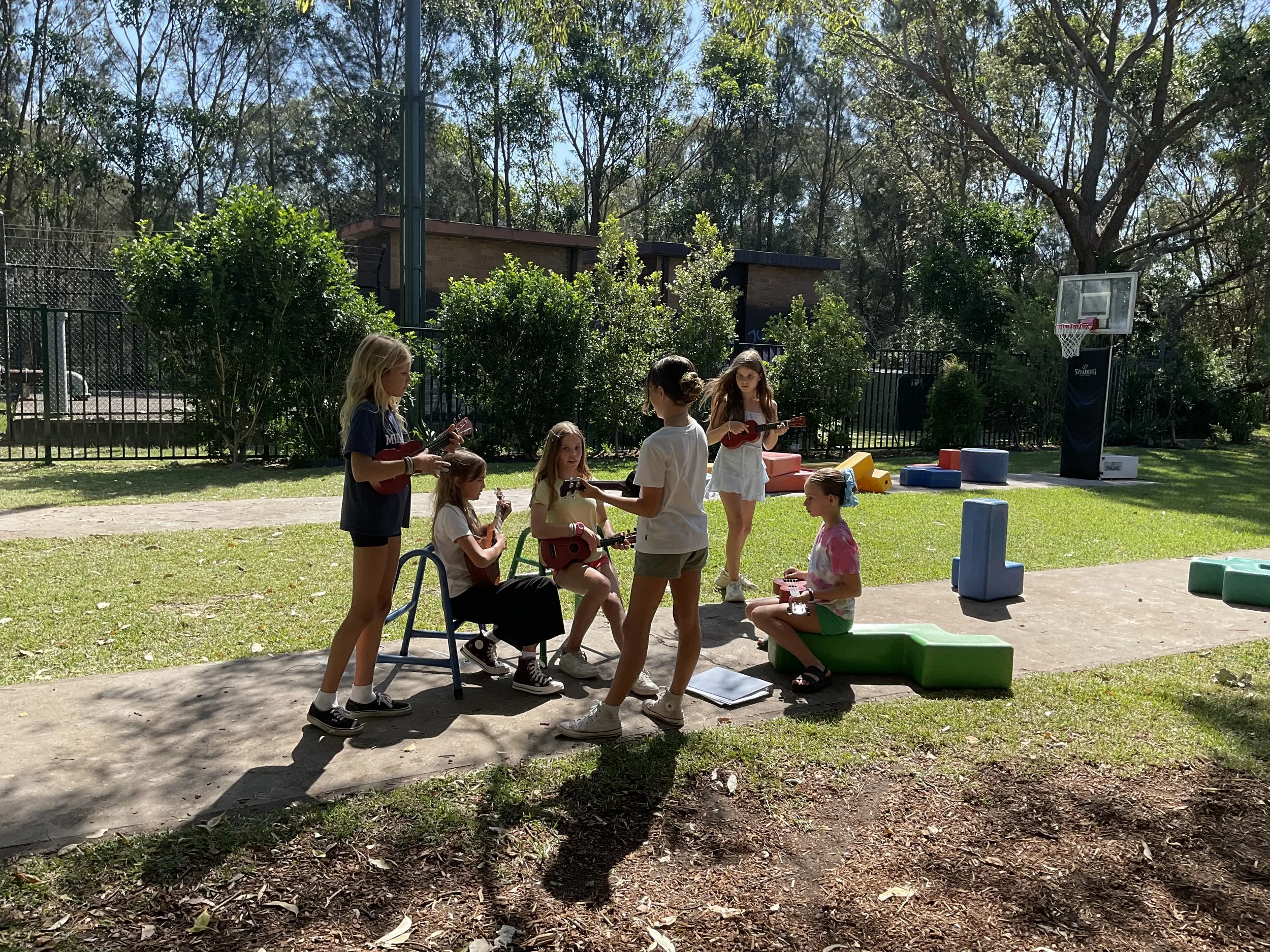
They also have access to a range of instruments, including keyboards, xylophones, glockenspiels, recorders, ukuleles and bells, allowing them to experiment, practise and develop confidence at their own pace.
Our focus is on participation rather than performance. We want children to experience music as something joyful and expressive, rather than something they do only for an audience.
For families interested in additional opportunities, we also offer a before-school choir led by parent volunteers, providing children with another chance to enjoy making music together in a relaxed and supportive environment.

What is it like inside a BMS classroom?
-
One of the advantages of being a small school is that every child is known, supported and valued as an individual.
Our Preschool classrooms have a maximum of 20 children with a qualified Montessori teacher and a Support Educator. Our Primary classrooms have up to 25 students and are led by a qualified Montessori teacher, supported by a Support Educator.
These class sizes allow our teachers to build strong relationships with every child, tailoring learning to their individual strengths, interests and stage of development while encouraging growing confidence and independence.
Being a small school also creates a strong sense of community. Children know one another across age groups, teachers work closely together and families quickly become part of the life of the school. It's one of the things parents tell us they value most about Barrenjoey.
-
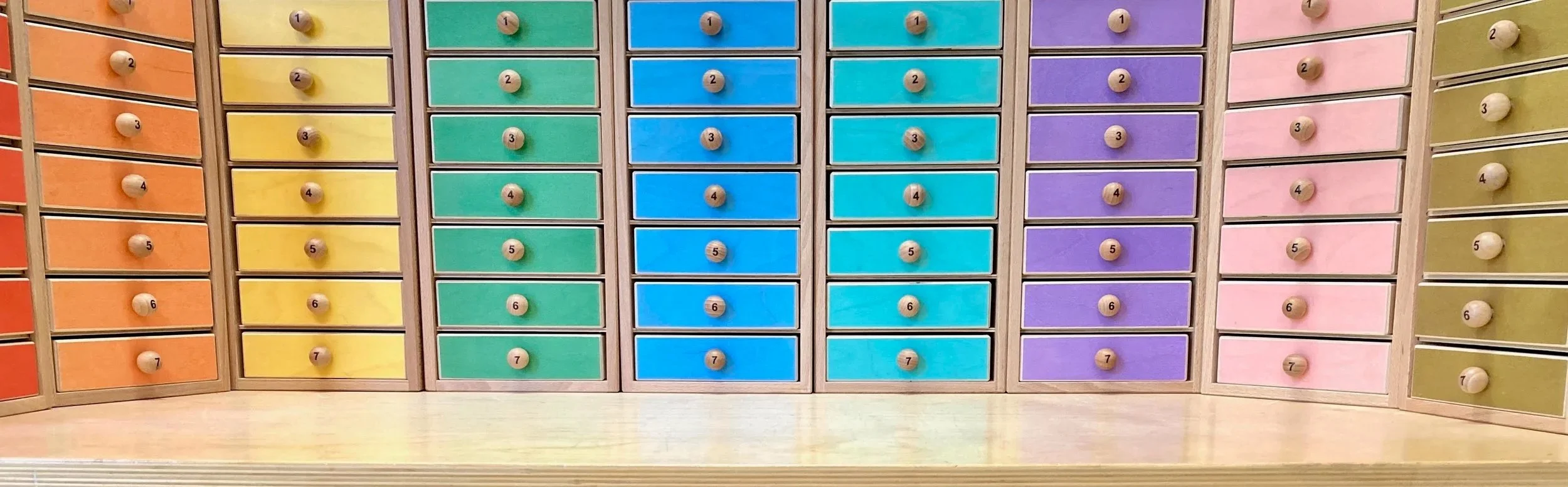
Montessori classrooms take a child-centred approach, designed to support children's natural developmental timeline - academically, socially and emotionally. The classrooms are thoughtfully arranged with purposeful materials that children can access independently, with support and guidance.
-
A Montessori classroom looks quite different from the classrooms many parents remember from their own school days. For many families, it's unlike anything they've experienced before.
Rather than seeing every child doing the same activity at the same time, you'll see children working individually or in small groups, each engaged in work that interests them. Some children may be reading, others exploring mathematics with Montessori materials, while another group is conducting a science experiment or working on a research project. Their activity has been chosen from carefully prepared work that has been introduced by their teacher. This allows each child to progress at a pace that's appropriate for them while being gently guided and challenged along the way.
The teacher plays a very active role throughout the day. Rather than standing at the front of the classroom delivering the same lesson to everyone, Montessori teachers observe each child closely, present new lessons individually or in small groups, monitor progress and know when it's time to introduce the next challenge.
The classroom is calm, purposeful and busy in a different way. Children move respectfully around the environment, choose meaningful work, seek help when they need it and develop increasing independence as they grow.
One of the first things families often notice is how peaceful our classrooms feel. That's because children have the time to become deeply engaged in their learning, rather than being interrupted every 30 or 40 minutes to move on to the next subject.
Every lesson, every material and every part of the environment has been carefully prepared to support children's learning and development. While it may look different from a traditional classroom, there's a great deal of purpose, structure and intention behind everything you see.
-
Montessori is sometimes misunderstood as giving children complete freedom to do whatever they like. In reality, children are given meaningful choices within carefully considered limits.
Children are encouraged to make choices about their learning, but those choices take place within a thoughtfully prepared environment and with the guidance of highly trained Montessori teachers. They choose from work that has been carefully introduced to them, learning to manage their time, take responsibility for their decisions and work respectfully alongside others.
Parents sometimes ask, "But what if my child doesn't like maths?" or "What if they choose reading all day?" That's where the skill of the Montessori teacher is so important.
Our teachers know every child well. Through careful observation, they understand what motivates each child, what captures their interest and how to present new learning in ways that spark curiosity and engagement.
One of the things I admire most about Montessori teachers is their ability to find the spark that engages each child. They know when to gently encourage, when to challenge and when to step back, helping children discover they are capable of far more than they often realise themselves.
Montessori isn't about leaving children to direct their own education. It's about skilled teachers carefully guiding each child's learning journey, helping them develop independence, resilience and the confidence to tackle work that doesn't always come easily.
-
Absolutely. In fact, we encourage it.
One of the best ways to understand Montessori is to experience it for yourself. Reading about Montessori can only tell part of the story—seeing children deeply engaged in their learning brings the philosophy to life in a way that words simply can't.
We regularly invite prospective and current parents to observe in our classrooms. During an observation, you'll notice children working independently and in small groups, moving purposefully through the classroom, and teachers quietly guiding learning through careful observation and individual lessons.
Many visitors comment on how calm the classrooms feel. Children aren't constantly being interrupted or rushed from one activity to the next. Instead, they're given the time and space to become deeply engaged in meaningful work.
For many families, spending time in the classroom is the moment Montessori truly "clicks." It's also why we believe the best way to understand Barrenjoey Montessori School isn't by reading about it—it's by experiencing it.
-
Our teachers are highly qualified educators who combine recognised teaching qualifications with specialised Montessori training.
Many of our teaching staff hold Association Montessori Internationale (AMI) qualifications, widely regarded as the international benchmark for Montessori teacher education. This specialised training provides a deep understanding of child development, observation and the carefully sequenced Montessori curriculum.
Just as importantly, our teachers are lifelong learners. They regularly participate in professional development and collaborate closely with one another to continually strengthen their practice.
We believe that exceptional education begins with exceptional educators, and we're proud of the experience, dedication and passion our team brings to the classroom every day.
-
Montessori teachers complete specialised training in addition to their teaching qualifications. Becoming a Montessori teacher involves learning not only the Montessori curriculum and materials, but also the art of observing children, understanding their development and knowing how and when to introduce new learning.
At Barrenjoey Montessori School, our teachers hold recognised Montessori qualifications through the Association Montessori Internationale (AMI), the international organisation founded by Dr Maria Montessori to preserve and uphold the integrity of the Montessori approach. We place a strong value on authentic Montessori teacher training because we believe it is fundamental to providing children with the highest quality Montessori education.
One of the things I admire most about Montessori teachers is their ability to find the spark that engages each child. They know how to present learning in ways that capture a child's interest, gently encourage them through challenges and build both confidence and independence over time.
I've also found that Montessori attracts a very special kind of educator. Our teachers don't simply see Montessori as a way of teaching—they believe in it as a way of understanding and respecting children. For many, it's far more than a profession. It's a philosophy they embrace every day, and that genuine passion is something our children and families experience from the moment they walk through the door.
When families visit our school, they often notice the beautiful classrooms and carefully prepared materials. While these are important, it's the skill, passion and dedication of our teachers that truly bring the Montessori environment to life.
-
Consistency is incredibly important for children, and we also recognise that there are times when teachers need to take leave due to illness, professional learning or family commitments.
When this happens, we don't rely on external casual staffing agencies. Instead, we work with a trusted group of educators who already know our school, our classrooms and our approach. This means children are greeted by familiar faces who understand the routines, expectations and culture of Barrenjoey Montessori School.
Our goal is always to provide children with the stability and consistency they need to feel secure, confident and ready to learn.
-
Yes. One of the strengths of Montessori education is the carefully balanced mix of ages within each classroom.
We intentionally maintain a balance of younger, middle and older children so that everyone benefits from the three-year learning cycle. Younger children learn by observing and being inspired by their older peers, while older children deepen their own understanding by mentoring, modelling and taking on leadership responsibilities.
While the exact number of children at each age naturally varies from year to year, we carefully consider the overall balance of each class when offering enrolments. This helps create a stable, collaborative learning environment where every child has the opportunity to learn, contribute and grow.
Our Preschool classrooms have a maximum of 20 children, and our Primary classrooms have up to 25 students.
-
There's no shortage of technology in today's world. What children need more time for is developing the human skills that technology can't replace.
In the early years, we deliberately focus on the foundations that matter most—concentration, curiosity, creativity, communication, resilience and the ability to be independent. We believe there will be plenty of time for children to learn technology, but childhood offers a unique opportunity to develop these essential life skills first.
For this reason, children in our Preschool program don't use technology. Instead, they learn through hands-on experiences, conversation, movement and the beautiful Montessori materials that engage all of the senses.
Technology is introduced gradually and intentionally as children move through the school, ensuring it supports learning rather than driving it. In Lower Primary, once children have established strong handwriting foundations, they begin learning touch typing, recognising that keyboard skills are an important part of modern communication alongside handwriting.
As students move into Upper Primary, technology is used to support touch typing, word processing and carefully guided research. Written work is generally developed by hand first, allowing children to organise their thinking, draft and edit before using technology to publish or present their final work. We also encourage students to begin their research with books before turning to the internet. Learning to use an index, compare sources, follow references and think critically develops research skills that simply can't be replaced by typing a question into a search engine.

What is school life like at BMS?
-
No. We don't have a school uniform.
One of the values at the heart of Montessori education is respect for each child as an individual. We believe children should feel comfortable being themselves, while also learning to make thoughtful choices about how they present themselves within a community.
Families are asked to dress children in practical, comfortable clothing that allows them to move freely, work independently and participate fully in all aspects of the day—from painting and gardening to cooking and outdoor exploration.
Rather than creating a sense of belonging through a uniform, we believe community is built through shared values, respectful relationships and a genuine appreciation of each child's individuality.
-
Parents are an important part of life at Barrenjoey Montessori School.
As a small, community-based school, we believe education is most successful when families and teachers work together. The relationships we build with parents strengthen our community and enrich the experience for every child.
All families are asked to contribute to the life of the school each term. We understand that every family has different skills, interests and availability, so there are many ways to become involved. Whether it's helping at an event, joining a working bee, supporting fundraising, sharing a professional skill or lending a hand behind the scenes, every contribution is valued.
One of the wonderful things about a small school is that your involvement makes a genuine difference. Parents often tell us that the more they contribute to the community, the more connected they feel—not only to the school, but to other families and to their child's educational journey.
We don't see parent involvement as an obligation. We see it as one of the things that makes Barrenjoey such a special place to belong.
-
We see education as a partnership between school and home, and we believe strong communication is an important part of every child's success.
One of the advantages of being a small school is that our teachers know every child and every family. You'll often see them at drop-off and pick-up, making it easy to have informal conversations and ask questions as they arise.
Throughout the year, we also provide more structured opportunities to stay connected, including:
Parent-teacher conferences twice each year
Written reports twice each year
Regular phone calls or meetings whenever needed
A weekly school newsletter
Parent education evenings and workshops
Classroom observation opportunities and school events
We encourage families to speak with us early if they have a question or concern. Open, honest communication helps us work together to support each child's wellbeing and learning.
-
Transitions at Barrenjoey Montessori School are carefully planned to ensure children feel confident, familiar and excited about the next stage of their educational journey.
Children generally move into Lower Primary at around six years of age and into Upper Primary at around nine years of age; usually for Term 1 or Term 3 of the school year. Like all aspects of Montessori education, these transitions are guided by each child's individual readiness and development, rather than age alone.
During the term before a transition, children participate in a structured transition program that includes visits to their new classroom, opportunities to meet their new teacher and spend time with their future classmates. We also hold information sessions for parents, giving families the opportunity to learn about the next stage of the Montessori journey and ask questions.
Because our programs are designed as one continuous educational journey, children are already familiar with the next stage before they transition. By the time they move into their new classroom, they know the environment, have begun building relationships and are excited for the next step in their Montessori journey. Having watched the older children in the next stage of the school, transitions are often something they look forward to with confidence and anticipation.
-
Our outdoor spaces are every bit as important as our classrooms, providing children with opportunities to explore, create, move and connect with the natural world.
Children are encouraged to build, balance, invent their own games and challenge themselves through open-ended play. These experiences foster creativity, cooperation, problem-solving and confidence because there isn't just one "right" way to play.
We believe children thrive when they have opportunities to assess risk, solve problems and develop confidence through their own experiences. Our outdoor environment provides the space and freedom for this to happen every day.
-
If your child is naturally curious, enjoys learning through doing, and you're looking for a school that values the whole child as much as academic achievement, Montessori may be exactly what you're looking for.

How does BMS prepare students for the future?
-
This is one of the questions we're asked most often, and understandably so.
Montessori children make the transition to high school with confidence. Throughout their time at Barrenjoey Montessori School, they develop much more than academic knowledge. They learn how to manage their time, organise themselves, think independently, solve problems and take responsibility for their own learning.
Academically, our students are well prepared. As a registered independent school, we meet the NSW curriculum and NESA requirements while delivering them through the Montessori approach. This means children leave us with strong foundations across all key learning areas, along with the confidence to tackle new challenges.
Just as importantly, they leave with well-developed social and emotional skills. They're used to working collaboratively, communicating respectfully with both adults and peers, and adapting to new situations. These qualities help them settle quickly into their new school communities.
Many of our graduates go on to attend independent, Catholic and public high schools, and we regularly hear positive feedback from both families and receiving schools about how well they adjust and thrive.
-
Many parents wonder whether moving from a Montessori classroom to a more traditional learning environment will be a difficult adjustment.
In our experience, children adapt remarkably well. While the classroom may look different, the skills they've developed at Barrenjoey Montessori School prepare them for whatever comes next.
Our students are independent learners who know how to manage their workload, ask thoughtful questions and take responsibility for their learning. They're confident working with others, comfortable communicating with teachers and resilient when faced with new challenges.
One of the advantages of a Montessori education is that children haven't simply memorised information—they've developed a deep understanding of concepts and learned how to learn. Those skills transfer naturally into any educational setting.
Parents often tell us how smoothly the transition goes. Many even comment that their children miss the independence and sense of responsibility they experienced in their Montessori classroom.
-
Success looks different for every child, so rather than asking whether Montessori children become "successful," we prefer to ask whether they're well prepared for life.
The Montessori approach develops much more than academic knowledge. Children learn to think independently, solve problems, manage their time, work collaboratively and take responsibility for their own learning. These are qualities that continue to serve them well long after they leave the classroom.
Research into Montessori education suggests that graduates often demonstrate strong executive functioning skills, creativity, adaptability and social confidence—qualities that are increasingly valued in today's world. More importantly, they develop a genuine sense of who they are, the confidence to embrace new challenges and the resilience to keep learning throughout their lives.
As a Principal, one of the greatest privileges of my role is watching our students grow from curious three-year-olds into capable young people ready for high school. It's even more special for me personally, having watched my own children make that same journey. Seeing the confident, independent young people they have become has only strengthened my belief in this way of educating children.
Ultimately, our goal isn't simply to prepare children for the next year of school. It's to prepare them for a lifetime of learning, meaningful relationships and the confidence to contribute positively to the world around them.

Still have a question?
Every child is different, and we know choosing the right school is a big decision.
If you haven't found the answer you're looking for, we'd love to hear from you. The best way to experience Barrenjoey Montessori School is to visit our campus, meet our teachers and see our classrooms in action.
We warmly invite you to book a tour or simply get in touch for a conversation. We're always happy to answer your questions and help you decide whether Barrenjoey Montessori School is the right fit for your family.